⚠️ Visitors to our site are often searching for information because they, their best friend, or a family member has unfortunately fallen into use of dangerous substances. We aim to provide educational information, but more importantly, we protect people from the dangers of all forms of substance abuse! ⚠️
Call our admissions department at (855) 855-6544 or verify your insurance here to get immediate substance abuse help for yourself or a loved one.
Alcohol has not been proven to directly cause acne. However, some studies report an association between drinking and acne, while the possible mechanisms remain uncertain. Drinking patterns, sleep, stress, sugary mixers, skin care, hormones, medications, and genetics may all influence what you see in the mirror. [1][2]
That means a breakout after drinking is worth noticing, but it is not proof that alcohol caused it. It is also not a sign that someone has alcohol use disorder.
In this article, you will learn what research says about alcohol and acne, which related habits may affect breakouts, how to distinguish acne from alcohol-related flushing or rosacea, what to do next, and when drinking may deserve attention for reasons beyond the skin.
Key Takeaways
- Alcohol is not established as a direct cause of acne, although observational studies have found an association in some populations. [2]
- Acne develops when pores become clogged. Hormones, excess oil, skin cells, bacteria, genetics, products, and other factors may contribute. [1]
- Sugary drinks, poor sleep, stress, and disrupted skin care may accompany drinking and could matter more than the specific type of alcohol.
- Facial flushing or small red bumps after alcohol may be rosacea rather than acne. A dermatologist can tell the difference. [6]
- Reducing alcohol may support broader health, but it cannot guarantee clear skin or replace appropriate acne treatment.
Can Alcohol Cause Acne?
Current evidence does not show that alcohol directly causes acne in every person.
A recent review found that several cross-sectional studies linked alcohol consumption with a higher likelihood of acne, but the results were not consistent across all groups. The review also noted that the biological explanation remains unclear. [2]
This distinction matters. An association means two things appeared together in a study. It does not prove that one caused the other.
People who drink may also differ in their sleep, stress levels, diet, smoking habits, skin care, or other factors that can affect acne.
What Actually Causes Acne?
Acne forms when pores become clogged, and several processes can contribute at the same time.
According to the American Academy of Dermatology, hormones can increase oil production. Genetics, oily skin or hair products, certain medicines, and other health conditions may also influence breakouts.
Stress can worsen existing acne, and too little sleep may be another aggravating factor. [1][5]
Alcohol is not listed as a single universal cause. For one person, it may appear to be part of a recurring pattern. For another, it may have no visible relationship to breakouts.
How Drinking May Affect Breakouts Indirectly
Alcohol may influence acne indirectly through the choices and routines that surround drinking.
Sugary Mixers and High-Glycemic Drinks
Some cocktails and premixed alcoholic drinks contain substantial amounts of added sugar.
The American Academy of Dermatology reports that small studies suggest a low-glycemic eating pattern may reduce acne for some people, although the evidence is not final. [3]
This does not mean that every sweet drink causes a breakout. It means the entire drink—not only the alcohol—may be relevant.
Sleep, Stress, and Missed Skin Care
A late night can change more than what you drink.
You may sleep less, touch your face more, skip cleansing, leave makeup on, or eat differently. Stress and too little sleep may worsen acne in some people, while harsh scrubbing or constantly switching products can irritate the skin. [1][4]
Rather than blaming one ingredient immediately, look at the full routine surrounding the breakout.
Inflammation Is a Possible Link, Not a Diagnosis
Alcohol can affect inflammatory and oxidative pathways, but that does not prove it caused an individual pimple.
Research on alcohol and skin disease has proposed inflammation, oxidative stress, changes in microorganisms, and alcohol metabolites as possible mechanisms.
For acne specifically, the available evidence remains limited and inconsistent. [2]
Could It Be Rosacea Instead of Acne?
Redness, warmth, flushing, or acne-like bumps after drinking may be rosacea rather than acne.
Rosacea commonly affects the center of the face and can cause persistent redness, visible blood vessels, burning, or pimple-like bumps. Alcohol is a common trigger for some people with rosacea, although people who never drink can also develop the condition. [6]
Acne is more likely to include blackheads, whiteheads, pimples, or deeper nodules.
Because the two conditions can overlap visually, repeated flushing or breakouts that do not respond to acne care should be assessed by a dermatologist.
Will Quitting Alcohol Clear Acne?
Quitting alcohol may help some people notice fewer triggers, but clear skin is not guaranteed.
If drinking was connected with sugary mixers, poor sleep, stress, missed skin care, or another personal trigger, changing the pattern may help.
However, acne may continue because hormones, genetics, products, medication, or an underlying condition still require attention.
There is no dependable day-by-day skin timeline. Our guide to what happens to your body when you stop drinking alcohol explains the broader recovery process, while this article remains focused on acne.
A useful approach is to take photographs in similar lighting and note drinking, sleep, menstrual changes, new products, and medications.
Look for a repeatable pattern over time instead of judging your skin the morning after one event.
What Should You Do About Acne After Drinking?
Keep your response simple, gentle, and consistent.
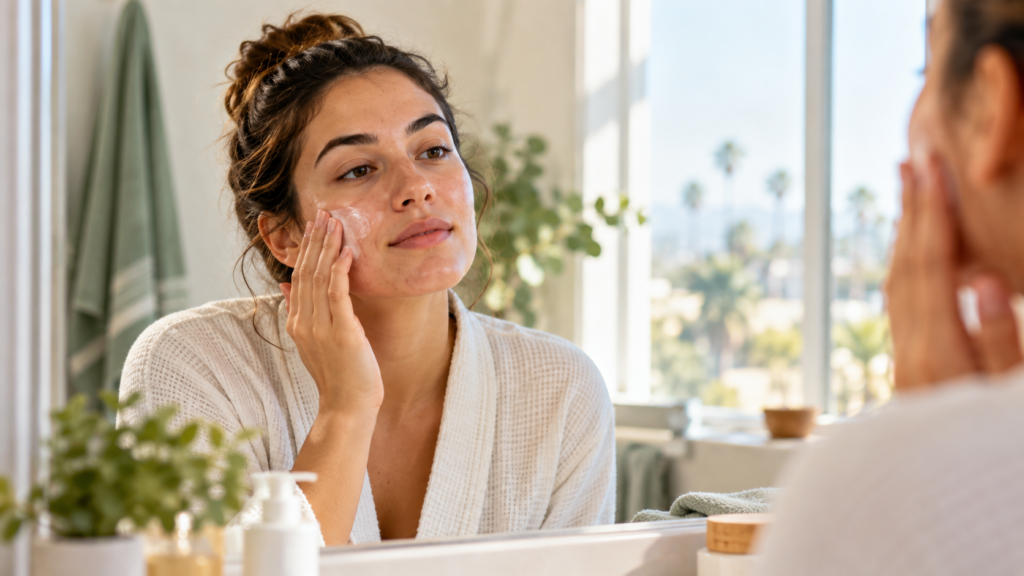
Wash your face with a mild, non-abrasive cleanser up to twice daily and after sweating. Avoid scrubbing, picking at the skin, and frequently changing treatments.
Choose products labeled non-comedogenic or unlikely to clog pores, and give an acne treatment enough time to work. [4][5]
If breakouts are painful, deep, scarring, persistent, or affecting your confidence, speak with a board-certified dermatologist.
Continue using prescribed medication unless the clinician managing your treatment advises you to change it.
Most importantly, do not use your skin as the only measure of your relationship with alcohol. Clear skin does not prove that drinking is safe, and acne does not prove addiction.
When Drinking Deserves a Closer Look
The drinking pattern matters more than the appearance of your skin.
Consider speaking with a professional if you:
- Regularly drink more than intended
- Cannot reduce or stop drinking
- Experience strong cravings
- Continue drinking despite health or relationship problems
- Organize daily life around alcohol
Evidence-based treatment may include behavioral care, medication, and mutual support, depending on the person’s individual needs. [8]
If you drink heavily or regularly, do not stop suddenly based on a skin concern without medical guidance. Alcohol withdrawal can become serious or life-threatening.
An alcohol detox program can assess withdrawal risk and provide appropriate monitoring. [7]
How Spark To Recovery Can Help With Alcohol and Acne

Noticing acne after drinking does not automatically mean that formal addiction treatment is necessary.
However, an evaluation may be helpful when alcohol use is difficult to control, repeatedly affects sleep, stress, nutrition, relationships, or mental health, or leads to cravings, withdrawal symptoms, or relapse.
Spark To Recovery provides alcoholism treatment in Los Angeles for people at different stages of alcohol use disorder.
Depending on the person’s needs, treatment may incorporate residential care, individual and group therapy, cognitive behavioral therapy, relapse-prevention planning, mental health treatment, and other individualized approaches.
For someone struggling with alcohol use alongside anxiety, depression, trauma, body-image distress, or another mental health concern, dual diagnosis treatment may address both sides of the pattern.
If you are considering treatment, you can review Spark To Recovery’s admissions process or verify your insurance benefits before deciding on the next step.
Alcohol and acne concerns do not automatically determine what level of care a person needs.
An individual assessment can help determine the safest and most appropriate level of support.
When Medically Supervised Treatment May Help With Alcohol and Acne

Medically supervised treatment may be appropriate when alcohol and acne concerns occur alongside physical dependence, significant withdrawal risk, repeated relapse, or unstable mental health symptoms.
It is not automatically necessary because a person develops acne, facial redness, or another skin change after drinking.
For someone who drinks occasionally and notices a possible connection with breakouts, tracking the pattern and speaking with a dermatologist may be enough.
The situation is different when the person drinks heavily most days, needs alcohol to feel normal, has experienced withdrawal before, or cannot reduce their drinking despite repeated attempts.
In those situations, suddenly stopping without medical guidance may be unsafe.
A medically supervised setting allows the treatment team to monitor withdrawal symptoms, nutrition, hydration, medications, and other possible complications while determining whether detox medication or a higher level of care is appropriate.
Residential treatment may also help when a person needs distance from everyday triggers or has repeatedly returned to drinking after trying to stop alone.
A structured environment provides consistent medical oversight and therapeutic support while the person works on emotional triggers, coping skills, the drinking pattern, and relapse prevention.
Treatment cannot promise clear skin, and acne may still require dermatology care.
The goal is to address alcohol use safely while helping the person build healthier and more consistent daily routines.
Professional treatment is not a punishment, and asking for help does not mean that you have failed. It means you are choosing to address the pattern before it becomes more disruptive or dangerous.
Medical disclaimer: This article is for general educational purposes and does not replace medical, dermatology, addiction-treatment, or mental health advice, diagnosis, treatment, or emergency care. Acne, flushing, and rosacea require individual assessment. Do not start, stop, skip, or change medication without guidance from the prescribing clinician. Call 911 for a medical emergency. If you or someone else is experiencing suicidal thoughts or a mental health crisis in the United States, call or text 988.
Frequently Asked Questions
Alcohol has not been proven to directly cause acne in everyone, although some studies suggest an association.
No alcoholic drink is universally the worst for acne. The amount consumed, added sugar, sleep, stress, diet, and skin-care routine may all affect the pattern.
There is no fixed timeline because hormones, genetics, skin products, medication, and other factors may continue to affect acne.
Not necessarily. Redness or small bumps may be flushing or rosacea, which alcohol can trigger in some people.
No. Alcohol use disorder is assessed through drinking patterns, loss of control, cravings, withdrawal symptoms, and consequences—not through skin appearance.

Laura A. Fierro, Ph.D., LMFT
Board-Certified Physician in Internal Medicine