

⚠️Visitors to our site are often searching for information because they, their best friend, or a family member has unfortunately fallen into use of dangerous substances. If you or a loved one has fallen ill to substance abuse, we protect people from the dangers and provide medically assisted treatment to encourage lasting recovery! ⚠️
Call our admissions department at (855) 855-6544 or verify your insurance here to get immediate substance abuse help for yourself or a loved one.
TL;DR
Adderall is a prescription stimulant widely used to treat ADHD, but it’s also one of the most commonly misused prescription medications, especially among students and professionals looking to boost focus, productivity, or energy. Because it’s legal and often obtained through a legitimate prescription, many people don’t realize misuse has turned into dependence until they try to stop and can’t. Understanding the signs of Adderall misuse and addiction can help individuals recognize a problem early and seek treatment before more serious consequences develop.
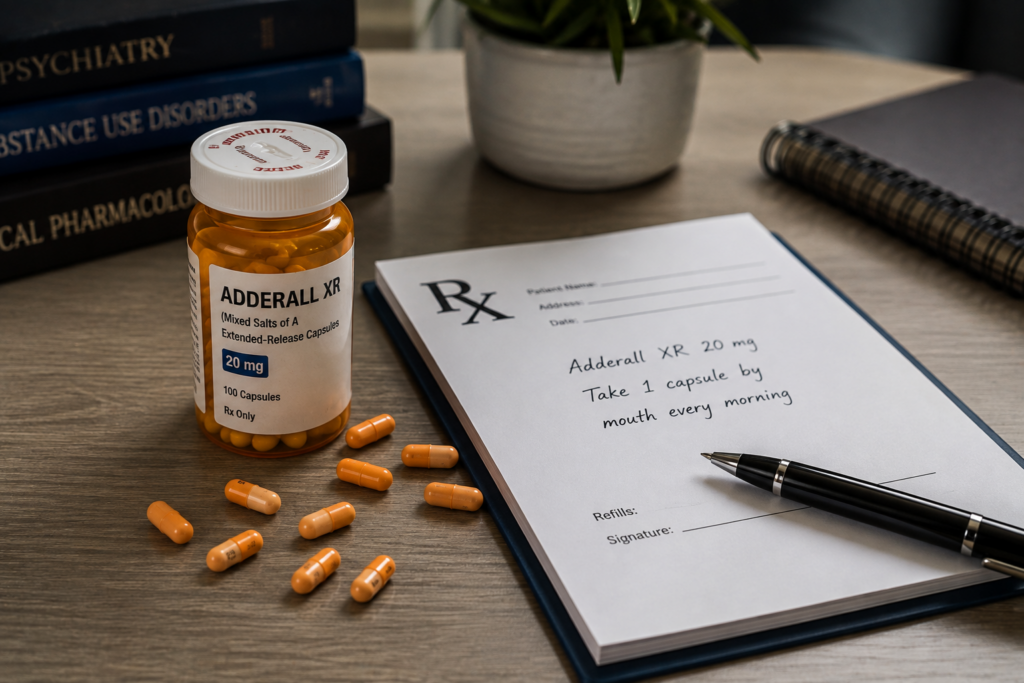
What Is Adderall, and Why Is It Misused?
Adderall is a prescription stimulant medication containing amphetamine and dextroamphetamine, most commonly prescribed to treat attention-deficit/hyperactivity disorder (ADHD) and narcolepsy.[1]
When taken as prescribed, Adderall can be safe and effective.
The problem arises when Adderall is used:
College students during exams • Professionals facing high-pressure deadlines • Entertainment and creative industry workers • Individuals seeking appetite suppression
This widespread, “functional” use is part of what makes Adderall misuse so easy to overlook.
Without a prescription • In higher doses than prescribed • More frequently than prescribed • For non-medical purposes, such as studying, working, or weight loss
Because Adderall increases focus, energy, and alertness, it has become especially popular among:
• College students during exams • Professionals facing high-pressure deadlines • Entertainment and creative industry workers • Individuals seeking appetite suppression
This widespread, “functional” use is part of what makes Adderall misuse so easy to overlook.
Can You Be Addicted to Adderall If You Have a Prescription?
Yes. This is one of the most common misconceptions about prescription stimulant misuse.
Many people assume that because a doctor prescribed the medication, dependence isn’t possible.
In reality, Adderall is classified as a Schedule II controlled substance, meaning it has a recognized medical use but also a high potential for misuse and dependence.[2]
Someone can:
Take more than their prescribed dose • Run out of medication early and “borrow” from others • Take it more frequently than directed • Become unable to function without it
All while technically holding a valid prescription.
The line between appropriate use and misuse often blurs gradually, not suddenly.
Signs of Adderall Misuse and Addiction
Because Adderall misuse can look like ambition or productivity on the surface, it’s important to look beyond appearances.
Common signs include:
Taking More Than Prescribed
A person may consistently take higher doses than directed, or take doses closer together than recommended, to maintain the desired effect.
Using It Without a Prescription
This includes taking someone else’s medication, buying it from another student or coworker, or obtaining it without a legitimate medical need.
Relying on It to Function
Many individuals begin to feel they cannot:
• Focus • Work • Study • Stay productive
…without taking Adderall first. This reliance is an early sign of psychological dependence.
Developing Tolerance
Tolerance occurs when the same dose no longer produces the same effects.
Someone who once felt focused on a single dose may find they need increasingly higher amounts to feel the same effect.
Experiencing a “Crash”
When Adderall wears off, many users experience:
• Extreme fatigue • Irritability • Depression-like symptoms • Intense hunger • Difficulty concentrating
This crash often drives individuals to take another dose simply to feel normal again.
Using It Outside Its Intended Purpose
Taking Adderall specifically to stay awake longer, suppress appetite, or experience a euphoric effect — rather than for its prescribed medical purpose — is a warning sign of misuse.
Hiding the Extent of Use
A person may:
• Avoid mentioning how often they take it • Take extra doses in secret • Minimize concerns raised by others • Seek multiple prescriptions from different providers
Feeling Unable to Stop or Cut Back
Repeated attempts to stop or reduce use, followed by an inability to maintain that change, is one of the clearest indicators of stimulant dependence.

What Are the Warning Signs Others Notice?
Friends, family, and coworkers are often the first to notice changes, even when the person themselves insists everything is fine.
Common warning signs include:
• Rapid weight loss • Increased talkativeness or restlessness • Irritability or mood swings • Periods of extreme energy followed by exhaustion • Difficulty sleeping • Becoming secretive about medication use • Anxiety or paranoia
Because Adderall misuse is often associated with high performance, loved ones may initially mistake these changes for stress rather than substance misuse.
Does Functioning Well Mean Adderall Isn’t a Problem?
No.
Similar to other forms of high-functioning substance use, the ability to maintain a job, grades, or responsibilities does not mean Adderall use is safe.
Even when daily performance seems intact, Adderall misuse can affect:
Physical Health
Long-term stimulant misuse increases the risk of:
• Cardiovascular strain, including increased heart rate and blood pressure • Sleep disturbances • Significant appetite suppression and weight loss • Risk of stimulant-induced psychosis at high doses
Mental Health
Adderall misuse can worsen or trigger:
• Anxiety • Paranoia • Depression, particularly during crash periods • Mood instability
Relationships
Stimulant misuse can lead to:
• Increased irritability with loved ones • Secrecy and trust issues • Withdrawal from non-drug-related activities
Long-Term Performance
While Adderall may offer short-term productivity gains, long-term misuse often leads to:
• Increased reliance just to reach baseline functioning • Cognitive burnout • Difficulty concentrating without the medication

How Is Adderall Addiction Different From Adderall Dependence?
These terms are often used interchangeably, but there’s a clinical distinction.
Dependence refers to the body adapting to a substance, often resulting in withdrawal symptoms when use stops.
Addiction, formally diagnosed as a stimulant use disorder under the DSM-5, involves a broader pattern, including:[3]
• Loss of control over use • Cravings • Continued use despite negative consequences • Failed attempts to cut back • Significant time spent obtaining or using the substance
Someone can be physically dependent on Adderall without meeting full criteria for addiction — but dependence often progresses toward addiction without intervention.
What Does Adderall Withdrawal Feel Like?
When someone who has been misusing Adderall stops or significantly reduces use, withdrawal symptoms can include:
• Severe fatigue • Increased appetite • Depression or low mood • Difficulty concentrating • Sleep disturbances, including vivid dreams or oversleeping • Irritability
While Adderall withdrawal is generally not medically dangerous in the way alcohol or benzodiazepine withdrawal can be, the psychological symptoms — particularly depression — can be severe enough to drive relapse without proper support.[4]

When Should Someone Seek Help?
Help should be considered when:
• Higher doses are needed to feel the same effect • Adderall is being used without a prescription, or beyond what’s prescribed • Daily functioning feels impossible without it • Attempts to stop or cut back have failed • Physical or mental health symptoms are emerging • Use is being hidden from others
You don’t need to wait until Adderall use causes a crisis to take it seriously. Early intervention is often more effective and far less disruptive than waiting for consequences to escalate.
How Is Stimulant Use Disorder Treated?
Treatment for Adderall addiction is typically tailored to the individual and may include:
Medical Evaluation and Detox Support
While Adderall withdrawal isn’t typically life-threatening, medical support can help manage depression, fatigue, and cravings safely.
Individual Therapy
Therapies such as cognitive-behavioral therapy (CBT) help identify the underlying reasons for misuse, whether academic pressure, work demands, or undiagnosed mental health conditions.
Group Therapy
Group counseling provides accountability and connection with others navigating similar challenges.
Dual Diagnosis Treatment
Many individuals who misuse Adderall are also managing:
• Undiagnosed or untreated ADHD • Anxiety • Depression • Significant academic or work-related stress
Addressing these underlying factors is often essential to long-term recovery.
Aftercare Planning
Long-term recovery is supported through relapse prevention strategies and ongoing care, particularly given the high-pressure environments many individuals return to.
Getting Help for Adderall Addiction with Spark To Recovery
If you’ve been searching “am I addicted to Adderall,” there’s a good chance you already suspect the answer.
Maybe you’ve noticed yourself needing more to feel the same effect.
Maybe you can’t imagine getting through a workday or exam without it.
Or maybe someone close to you has expressed concern about how often you’re using it.
The truth is that stimulant misuse often hides behind productivity, ambition, and success — making it easy to dismiss as simply “needing an edge.”
At Spark To Recovery, we understand the unique challenges of stimulant misuse, including the academic and professional pressures that often drive it. Our treatment programs help individuals address Adderall misuse and the underlying factors contributing to it through medical support, evidence-based therapies, dual diagnosis care, and individualized recovery planning.
You don’t have to wait for a breaking point to get support.
If you or someone you love is struggling with addiction, contact us today to speak with a compassionate admissions specialist about your options.

Frequently Asked Questions
1. Can you get addicted to Adderall even with a prescription? Yes. Adderall is a Schedule II controlled substance with a recognized potential for misuse and dependence, even when taken under a valid prescription, if it’s used in higher amounts or more frequently than directed.
2. What are the signs of Adderall addiction? Common signs include needing higher doses for the same effect, using it without a prescription, relying on it to function, experiencing a “crash” when it wears off, and failed attempts to cut back or stop.
3. Is Adderall withdrawal dangerous? Adderall withdrawal is generally not medically dangerous, but symptoms like severe fatigue and depression can be intense and may increase the risk of relapse without proper support.
4. Can Adderall misuse cause mental health problems? Yes. Long-term misuse can worsen anxiety and depression and, in high doses, has been associated with paranoia or stimulant-induced psychosis.
5. When should someone seek treatment for Adderall misuse? Treatment should be considered whenever use feels difficult to control, is happening outside of a prescription’s guidance, or is affecting physical health, mental health, or relationships.
Sources
[1] National Institute on Drug Abuse. (2024). Prescription Stimulants DrugFacts. U.S. Department of Health and Human Services. — https://nida.nih.gov
[2] Drug Enforcement Administration. (n.d.). Drug Scheduling. — https://www.dea.gov/drug-information/drug-scheduling
[3] American Psychiatric Association. (2022). Diagnostic and Statistical Manual of Mental Disorders, 5th Edition. — https://www.psychiatry.org/psychiatrists/practice/dsm
[4] Substance Abuse and Mental Health Services Administration. (2024). Stimulant Use Disorders. U.S. Department of Health and Human Services. — https://www.samhsa.gov