
⚠️Visitors to our site are often searching for information because they, their best friend, or a family member has unfortunately fallen into use of dangerous substances. If you or a loved one has fallen ill to substance abuse, we protect people from the dangers and provide medically assisted treatment to encourage lasting recovery! ⚠️
Call our admissions department at (855) 855-6544 or verify your insurance here to get immediate substance abuse help for yourself or a loved one.
TL;DR
One of the biggest barriers to seeking addiction treatment is uncertainty about cost. Many people delay getting help simply because they don’t know whether their insurance will cover it. The good news is that most PPO insurance plans offer some level of coverage for substance abuse treatment, and Spark To Recovery works with many PPO plans and is in-network with select insurers. We do not currently accept government-funded plans such as Medicaid or Medi-Cal. Understanding the difference between these plan types — and what your specific policy covers — can help you move forward with clarity instead of guesswork.
Does My Insurance Cover Rehab in California?
In most cases, yes — but coverage depends heavily on the type of plan you have.
Thanks to the Affordable Care Act and the Mental Health Parity and Addiction Equity Act, most health insurance plans sold in the United States are required to cover substance use disorder treatment as an essential health benefit.[1]
However, “required to cover it” doesn’t mean every plan covers it the same way, or that every treatment provider can accept every plan.
This is where things get confusing for most people.
At Spark To Recovery, we work with PPO insurance plans and are in-network with select insurance providers. We do not currently accept Medicaid or Medi-Cal.
Below, we’ll break down exactly what that means for you.
Can You Be Addicted to Adderall If You Have a Prescription?
Yes. This is one of the most common misconceptions about prescription stimulant misuse.
Many people assume that because a doctor prescribed the medication, dependence isn’t possible.
In reality, Adderall is classified as a Schedule II controlled substance, meaning it has a recognized medical use but also a high potential for misuse and dependence.[2]
Someone can:
Take more than their prescribed dose • Run out of medication early and “borrow” from others • Take it more frequently than directed • Become unable to function without it
All while technically holding a valid prescription.
The line between appropriate use and misuse often blurs gradually, not suddenly.
PPO vs. HMO vs. Medicaid/Medi-Cal: What’s the Difference?
Not all insurance plans work the same way, especially when it comes to behavioral health and addiction treatment. Here’s a simple breakdown.
PPO (Preferred Provider Organization)
PPO plans generally offer:
• More flexibility in choosing providers • The ability to see out-of-network providers (often at a higher cost-share) • Fewer referral requirements • Broader access to specialized or private treatment facilities
Because of this flexibility, PPO plans are the most common type of coverage accepted by private addiction treatment centers, including Spark To Recovery.
HMO (Health Maintenance Organization)
HMO plans typically:
• Require members to use a specific network of providers • Require referrals from a primary care physician • Offer limited or no out-of-network coverage
HMO plans can sometimes cover addiction treatment, but options are often restricted to providers within that specific network.
Medicaid / Medi-Cal
Medicaid (called Medi-Cal in California) is a government-funded health insurance program for individuals who qualify based on income and other criteria.
While Medi-Cal does cover substance use treatment, it generally does so through state-contracted public and community-based providers rather than private treatment centers. This means not all treatment centers are in-network with Medi-Cal or Medicaid, and that includes Spark to Recovery.
This is why many private facilities, including Spark To Recovery, are not able to accept Medi-Cal directly.
If you currently have Medi-Cal, the SAMHSA National Helpline (1-800-662-4357) and the SAMHSA Treatment Locator can help connect you with Medi-Cal-accepting providers in your area.

What Does Spark To Recovery Accept?
At Spark To Recovery, we work with:
• Most major PPO insurance plans • Select in-network insurance providers • Employer Insurance
We do not currently accept:
• Medicaid • Medi-Cal • Other government-funded insurance plans
Because every policy is different, even among PPO plans, the most accurate way to know what’s covered is to have your benefits verified directly.
How Does Insurance Verification Work?
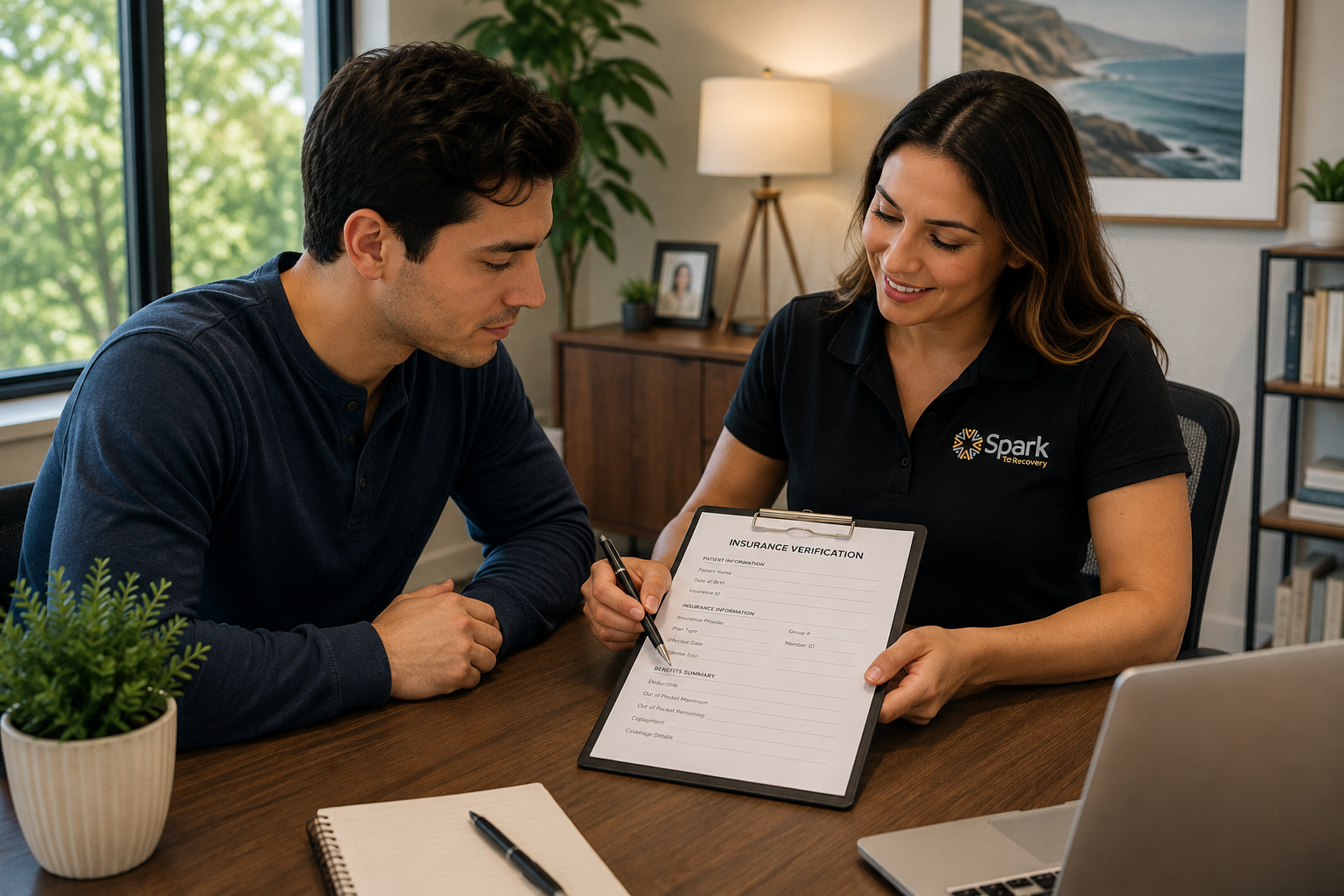
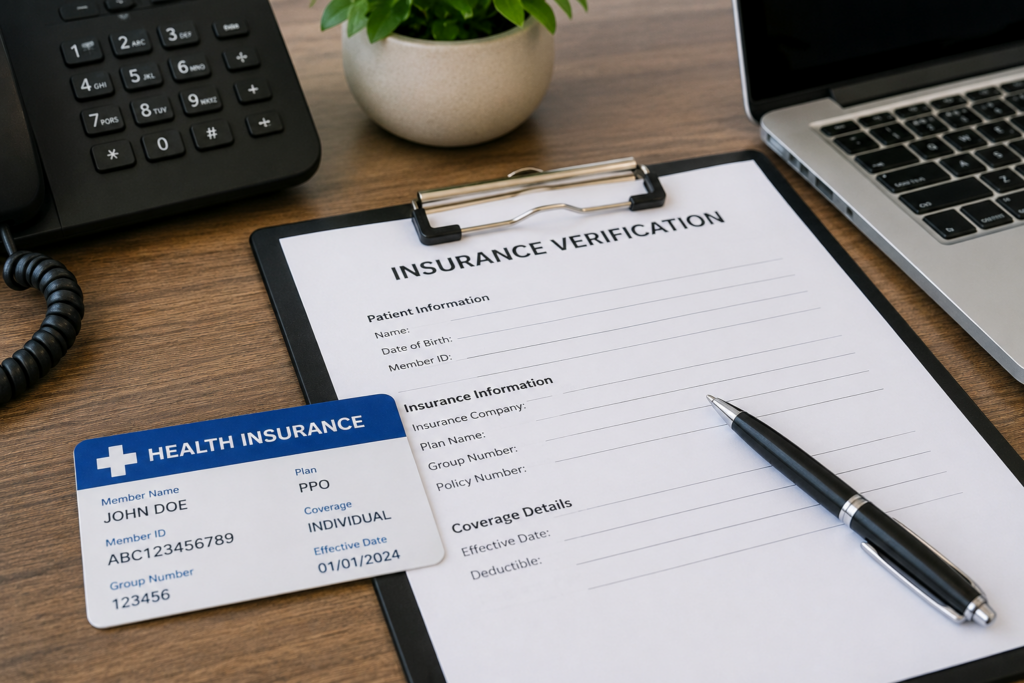
Verifying your insurance benefits is typically a quick, confidential process. Here’s what to expect:
- Provide Basic Information
You or a family member shares basic insurance details, typically your provider name and policy information.
- Our Team Checks Your Benefits
Our admissions team contacts your insurance provider directly to determine your specific coverage for addiction treatment, including detox, residential care, and outpatient services. This process takes less than an hour after providing your information to us, any time before 3 PM Pacific.
- You Receive a Clear Answer
You’re given a straightforward explanation of what’s covered, what (if anything) you may be responsible for, and what your options are.
This process is free, confidential, and does not obligate you to move forward with treatment.
What If I Don’t Have a PPO Plan?
If you have an HMO plan, Medicaid, Medi-Cal, or no insurance at all, you still have options:
Self-Pay
Many individuals, particularly those seeking privacy, flexibility, or a specific level of care not available through their network, choose to pay out of pocket for treatment.
Payment Plans
Some treatment centers, including Spark To Recovery, may be able to discuss flexible payment arrangements depending on the program.
Public and State-Funded Resources
If Medi-Cal is your only coverage option, state-contracted providers and community health centers are equipped to accept it. The SAMHSA Treatment Locator is a reliable place to start.
The path that’s right for you depends on your specific financial situation, the level of care needed, and how quickly treatment is needed.

Why Understanding Your Coverage Matters
Help should be considered when:
• Higher doses are needed to feel the same effect • Adderall is being used without a prescription, or beyond what’s prescribed • Daily functioning feels impossible without it • Attempts to stop or cut back have failed • Physical or mental health symptoms are emerging • Use is being hidden from others
You don’t need to wait until Adderall use causes a crisis to take it seriously. Early intervention is often more effective and far less disruptive than waiting for consequences to escalate.
How Is Stimulant Use Disorder Treated?
Addiction doesn’t wait for paperwork to get sorted out — but knowing your options upfront can prevent delays once you’ve made the decision to seek help.
Understanding your coverage can help you:
• Avoid unexpected costs • Choose the right level of care • Move forward with treatment faster • Reduce stress during an already difficult time
Get Free Help Verifying Your Insurance Benefits with Spark To Recovery
If you’ve been searching for clarity on how insurance works for addiction treatment, you’re already taking an important step toward recovery.
At Spark To Recovery, we work with PPO insurance plans and select in-network providers to help make treatment as accessible as possible. While we are not able to accept Medicaid or Medi-Cal at this time, our admissions team is happy to verify your specific benefits and walk you through what your plan covers — at no cost and with no obligation.
If your coverage isn’t a fit for our program, we’re also glad to help point you toward resources that may be better suited to your situation.
Recovery is possible, and understanding your options is the first step.
If you or someone you love is struggling with addiction, contact us today to speak with a compassionate admissions specialist about your options.

Frequently Asked Questions
1. Does insurance cover rehab in California? In most cases, yes. Most insurance plans are required to cover substance use treatment as an essential health benefit, though coverage and provider access vary by plan type.
2. What’s the difference between PPO and HMO for rehab coverage? PPO plans generally allow more flexibility in choosing providers, including private treatment centers, while HMO plans typically require members to stay within a specific provider network and may need a referral.
3. Does Spark To Recovery accept Medi-Cal or Medicaid? No. Spark To Recovery works with PPO insurance plans and select in-network providers but does not currently accept Medicaid or Medi-Cal.
4. What if my insurance doesn’t cover treatment at Spark To Recovery? Self-pay and flexible payment options may be available. If Medi-Cal is your only coverage, the SAMHSA Treatment Locator can help connect you with a state-contracted provider.
5. How do I find out what my insurance covers? The fastest way is through a free, confidential insurance verification with our admissions team, who will contact your provider directly to confirm your benefits.
Sources
[1] U.S. Department of Health and Human Services. (2024). Mental Health and Substance Use Insurance Help. — https://www.hhs.gov/programs/topic/mental-health-substance-use-insurance-help
[2] Substance Abuse and Mental Health Services Administration. (2024). Find Treatment. U.S. Department of Health and Human Services. — https://findtreatment.gov
[3] Medi-Cal. (n.d.). Mental Health and Substance Use Disorder Services. California Department of Health Care Services. — https://www.dhcs.ca.gov