⚠️Visitors to our site are often searching for information because they, their best friend, or a family member has unfortunately fallen into use of dangerous substances. If you or a loved one has fallen ill to substance abuse, we protect people from the dangers and provide medically assisted treatment to encourage lasting recovery! ⚠️
Call our admissions department at (855) 855-6544 or verify your insurance here to get immediate substance abuse help for yourself or a loved one.
TL;DR
Xanax (alprazolam) and alcohol are two of the most commonly used substances in the country, and both are legal in the right context. Because of this, many people underestimate how dangerous it is to combine them. In reality, mixing Xanax and alcohol is one of the most common causes of accidental overdose, precisely because both substances depress the central nervous system in overlapping ways. Understanding why this combination is so risky can help individuals and families recognize danger signs and seek help before a dangerous situation becomes fatal.
Why Do People Mix Xanax and Alcohol?
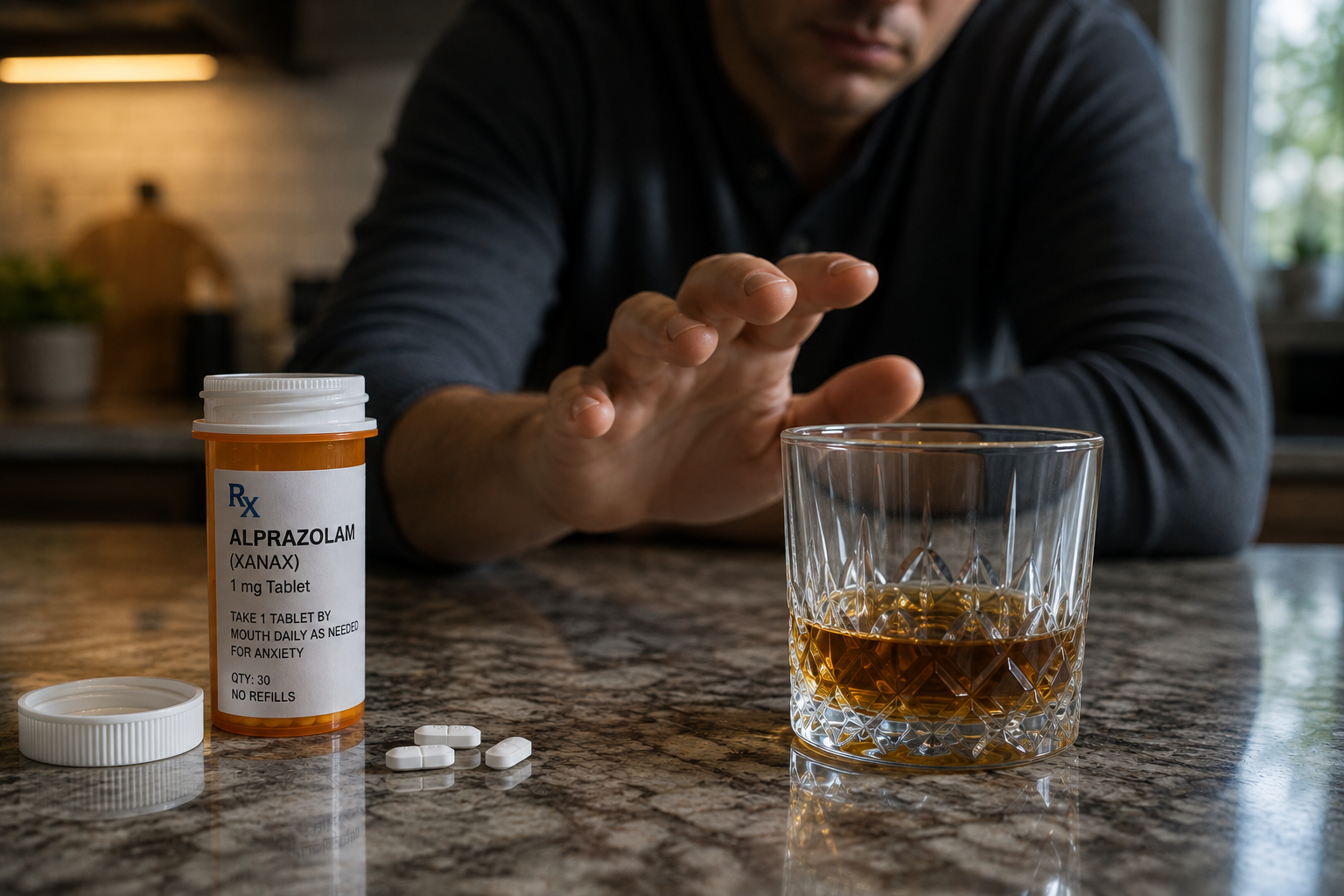
Xanax is a benzodiazepine commonly prescribed for anxiety and panic disorders.[1] Alcohol is a legal, widely available depressant.
People combine the two for a variety of reasons, including:
- Believing a drink will “take the edge off” while on medication
- Using alcohol to enhance the sedative or euphoric effects of Xanax
- Drinking socially without realizing a prescribed dose is still active in their system
- Using both substances separately to cope with anxiety, stress, or insomnia
In many cases, the danger isn’t intentional. It comes from underestimating how the two substances interact.
Why Is This Combination So Dangerous?
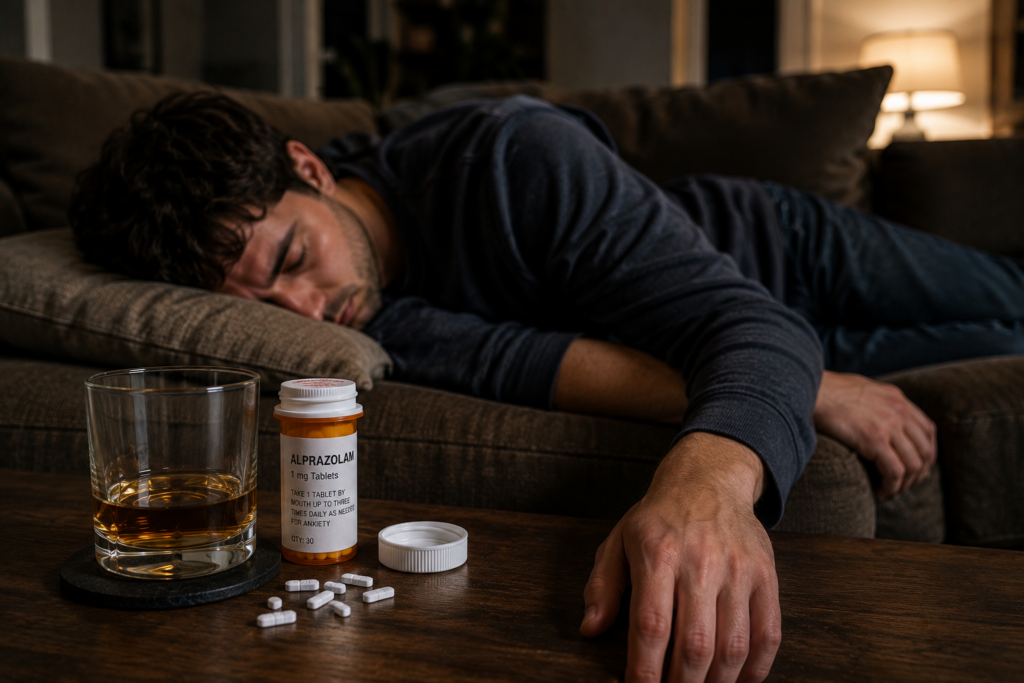
Both Xanax and alcohol are central nervous system (CNS) depressants.
Individually, each substance slows down brain activity, breathing, and heart rate.
When combined, their effects don’t simply add together — they compound each other, often unpredictably.[2]
This means a person can experience:
- Far greater sedation than either substance alone would produce
- Significantly slowed or stopped breathing
- Loss of consciousness
- Memory blackouts, even at doses that wouldn’t normally cause one
Because both substances affect the same systems in the brain and body, even moderate amounts of each, taken together, can produce effects similar to a much higher dose of either one alone.
Signs of Xanax and Alcohol Interaction
It’s important to recognize the warning signs of a dangerous reaction, both in yourself and in others.
Warning signs include:
- Extreme drowsiness or difficulty staying awake
- Slurred speech
- Confusion or disorientation
- Loss of coordination
- Slowed or shallow breathing
- Bluish lips or fingertips
- Unresponsiveness
These symptoms can escalate quickly, especially if more of either substance is consumed before the first dose has fully taken effect.
What to Do in an Emergency
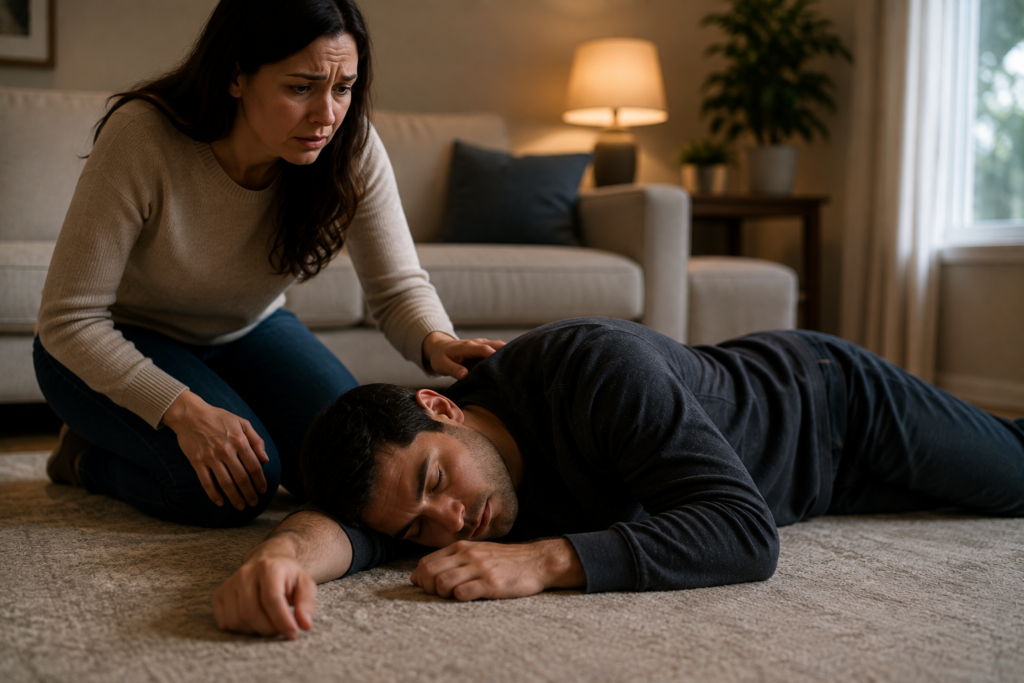
If you or someone else is showing signs of overdose after mixing Xanax and alcohol, this is a medical emergency.
- Call 911 immediately
- Keep the person awake and sitting up if possible
- Turn them onto their side if they are vomiting or unconscious, to prevent choking
- Do not leave them alone
- Tell emergency responders exactly what was taken and approximately how much, if known
Do not wait to see if symptoms improve on their own. Respiratory depression from combining these substances can be fatal, and timing matters.friends who understand the situation.
Why Is This Combination So Common, Despite the Risk?
A significant factor is that both substances are legal and widely accessible.
Unlike combining alcohol with an illicit drug, many people don’t view drinking while on a Xanax prescription as “dangerous drug use” in the same way.
Additionally:
- Tolerance to one substance doesn’t protect against the other
- Alcohol can intensify the sedative effects of Xanax even at social drinking levels
- People with anxiety disorders, who are often prescribed Xanax, may also be more likely to use alcohol to self-medicate
This combination of legality, accessibility, and underestimated risk is part of why it remains one of the most common causes of accidental overdose involving prescription medication.[3]
Does Mixing Xanax and Alcohol Always Cause Overdose?
No, not every instance results in a medical emergency. But unpredictability is exactly what makes this combination so dangerous.
Several factors affect the severity of the interaction, including:
- The dose of each substance
- How much time has passed between use
- Individual tolerance to benzodiazepines and alcohol
- Body weight, metabolism, and overall health
- Whether other substances are also involved
Because there’s no way to reliably predict how a specific combination will affect a specific person, every instance of mixing the two carries real risk, not just a worst-case scenario.

Can You Become Addicted to Xanax and Alcohol Together?
Yes, and this pattern is particularly difficult to break.
When Xanax and alcohol are used together regularly, the body can develop dependence on both substances simultaneously.
This is especially concerning because:
- Withdrawal from either benzodiazepines or alcohol alone can be medically dangerous
- Withdrawing from both at the same time significantly increases the risk of seizures and other severe complications
- Stopping either substance abruptly, without medical supervision, can be life-threatening
This is why medical detox is strongly recommended for anyone regularly combining these substances, rather than attempting to stop on their own.
How Is Polysubstance Use Treated?
Treating combined Xanax and alcohol use requires a careful, medically supervised approach.
Medical Detox
Because withdrawal from both substances can be dangerous, medical detox allows for safe, monitored tapering and management of withdrawal symptoms.
Comprehensive Assessment
Treatment providers assess the full scope of use, including how long, how much, and how frequently each substance has been used, to create a safe treatment plan.
Individual and Group Therapy
Therapy addresses the underlying reasons for use, often anxiety, stress, or trauma, while building healthier coping strategies.
Dual Diagnosis Treatment
Many individuals using Xanax and alcohol together are also managing an underlying anxiety disorder. Treating both the substance use and the underlying condition is essential for long-term recovery.
Aftercare and Relapse Prevention
Ongoing support helps individuals maintain recovery and develop healthier ways to manage the anxiety or stress that originally drove the substance use.
Getting Help for Xanax and Alcohol Addiction with Spark To Recovery
If you or someone you love has been combining Xanax and alcohol, the most important step isn’t understanding exactly how dangerous it is, it’s getting safe support to stop.
Maybe it started as an occasional drink while on a prescription.
Maybe it’s become a regular pattern that feels difficult to break.
Or maybe you’ve already experienced a frightening moment that made the risk feel real.
At Spark To Recovery, we provide medically supervised detox and individualized treatment for individuals struggling with polysubstance use, including the combined use of benzodiazepines and alcohol. Our team understands the unique medical risks involved and is equipped to manage withdrawal safely while addressing the underlying causes of use.
You don’t have to wait for an emergency to get help.
If your loved one is struggling with xanax and alcohol addiction, contact us today to speak with a compassionate admissions specialist about your options.

Frequently Asked Questions
1. Why is mixing Xanax and alcohol so dangerous? Both substances depress the central nervous system. When combined, their effects compound each other, increasing the risk of extreme sedation, slowed breathing, and overdose.
2. What are the signs of a dangerous reaction? Warning signs include extreme drowsiness, confusion, slurred speech, slowed or shallow breathing, bluish lips or fingertips, and unresponsiveness. This requires immediate emergency medical attention.
3. Can you withdraw from Xanax and alcohol at the same time safely? Withdrawing from either substance alone can be medically dangerous, and doing so from both at once significantly increases the risk of seizures. Medical detox is strongly recommended.
4. Is it dangerous to drink alcohol while taking Xanax as prescribed? Yes. Even moderate alcohol use while taking Xanax as prescribed can intensify sedative effects unpredictably and increase the risk of dangerous side effects.
5. What should I do if someone shows signs of overdose after mixing these substances? Call 911 immediately, keep the person on their side if vomiting or unconscious, and stay with them until help arrives. Do not wait to see if symptoms resolve on their own.
Sources
[1] National Institute on Drug Abuse. (2024). Benzodiazepines and Opioids. U.S. Department of Health and Human Services. — https://nida.nih.gov
[2] Substance Abuse and Mental Health Services Administration. (2024). Polysubstance Use Facts. U.S. Department of Health and Human Services. — https://www.samhsa.gov
[3] Centers for Disease Control and Prevention. (2024). Benzodiazepine Overdose Data. — https://www.cdc.gov
[4] National Institute on Alcohol Abuse and Alcoholism. (2025). Alcohol’s Effects on the Body. — https://www.niaaa.nih.gov