

⚠️Visitors to our site are often searching for information because they, their best friend, or a family member has unfortunately fallen into use of dangerous substances. We aim to provide educational information like “Can You Detox While Pregnant?“ but more importantly, we protect people from the dangers of all forms of substance abuse! ⚠️
Call our admissions department at (855) 855-6544 or verify your insurance here to get immediate substance abuse help for yourself or a loved one.
Introduction
In the quiet corridors of maternal health, few questions carry as much weight—or as much complexity—as this: can you detox while pregnant? It’s a question that arrives wrapped in urgency, tinged with fear, and loaded with the kind of vulnerability that only expectant mothers truly understand. Picture this: you’ve just discovered you’re pregnant, and suddenly, every choice you make carries twice the consequence. The substance use that once felt manageable now feels like a ticking clock, and the instinct to “clean out your system” feels both desperate and necessary.
But here’s the thing about pregnancy and detoxification—it’s not as simple as drinking green juice or sweating it out at the gym. When we talk about detoxing while pregnant, we’re entering territory that requires medical precision, expert guidance, and, above all, compassion. At Spark To Recovery, we’ve walked alongside countless women facing this exact crossroads, and we’re here to cut through the noise with the truth you need to hear.

Understanding What Medical Detox Really Means
Let’s start by clarifying what we mean when we talk about detoxification during pregnancy. The term “detox” has been co-opted by wellness culture to mean everything from juice cleanses to Instagram-worthy spa treatments. But in the context of substance use and pregnancy, detoxing while pregnant refers to something far more serious: the medically supervised process of safely removing drugs or alcohol from your system while managing potentially dangerous withdrawal symptoms.
What is a medical detox? According to the National Institute on Drug Abuse, medical detoxification is “a set of interventions aimed at managing acute intoxication and withdrawal.” [1] It’s not about punishment or willpower—it’s about stabilizing your body under expert care while protecting both you and your developing baby. Think of it as the medical equivalent of a carefully orchestrated rescue operation, where every step is calibrated to minimize risk and maximize safety.
The reality is this: pregnancy changes everything about how substances move through your body. Your metabolism accelerates, your blood volume increases by nearly 50%, and your liver works overtime. These physiological shifts mean that detoxing during pregnancy isn’t simply a scaled-down version of standard detox—it’s an entirely different animal that requires specialized protocols and round-the-clock monitoring.

Is It Safe to Withdraw While Pregnant?
Here’s where we need to get brutally honest. The answer to “is it safe to detox while pregnant?” isn’t a simple yes or no—it’s a conditional “it depends,” and those conditions matter enormously.
For some substances, abrupt withdrawal can pose serious risks to both mother and baby. For others, continuing use presents the greater danger. This is why attempting to detox on your own, without medical supervision, is extraordinarily risky during pregnancy. Your body isn’t just responding to withdrawal—it’s also sustaining another life, and the physiological stress of withdrawal can have consequences that extend far beyond your own discomfort.
The dangers of unsupervised withdrawal during pregnancy include:
- Severe dehydration from vomiting or diarrhea
- Electrolyte imbalances that can trigger cardiac complications
- Seizures (particularly with alcohol or benzodiazepine withdrawal)
- Premature labor or miscarriage
- Placental abruption
- Fetal distress or developmental complications
According to research published by the National Institutes of Health, “Pregnant women with substance use disorders require specialized treatment approaches that address both addiction and prenatal care simultaneously.” [2] This isn’t about scaring you—it’s about equipping you with the information you need to make safe choices.
Navigating Detox for Pregnant Women: What You Need to Know
If you’re searching for information on how to detox while pregnant, you’re likely feeling overwhelmed by conflicting advice. The internet is flooded with suggestions ranging from “natural detox while pregnant” remedies to potentially dangerous DIY protocols. Let’s separate fact from fiction.
The gold standard for safe detox while pregnant is always medically supervised withdrawal. This means entering a licensed treatment facility where healthcare professionals can:
- Conduct comprehensive assessments to understand your substance use history, pregnancy stage, and overall health
- Create individualized detox protocols tailored to your specific situation
- Monitor vital signs continuously for both you and your baby
- Manage withdrawal symptoms with pregnancy-safe medications when appropriate
- Provide obstetric care alongside addiction treatment
- Offer nutritional support to address deficiencies common in substance use
- Coordinate transition planning for ongoing recovery support
The Australian Drug Foundation notes that “withdrawal symptoms and their intensity vary significantly depending on the substance, duration of use, and individual physiology.” [3] This variation is why cookie-cutter approaches to pregnancy detox are not just ineffective—they’re potentially dangerous.
Understanding Withdrawal Timelines During Pregnancy
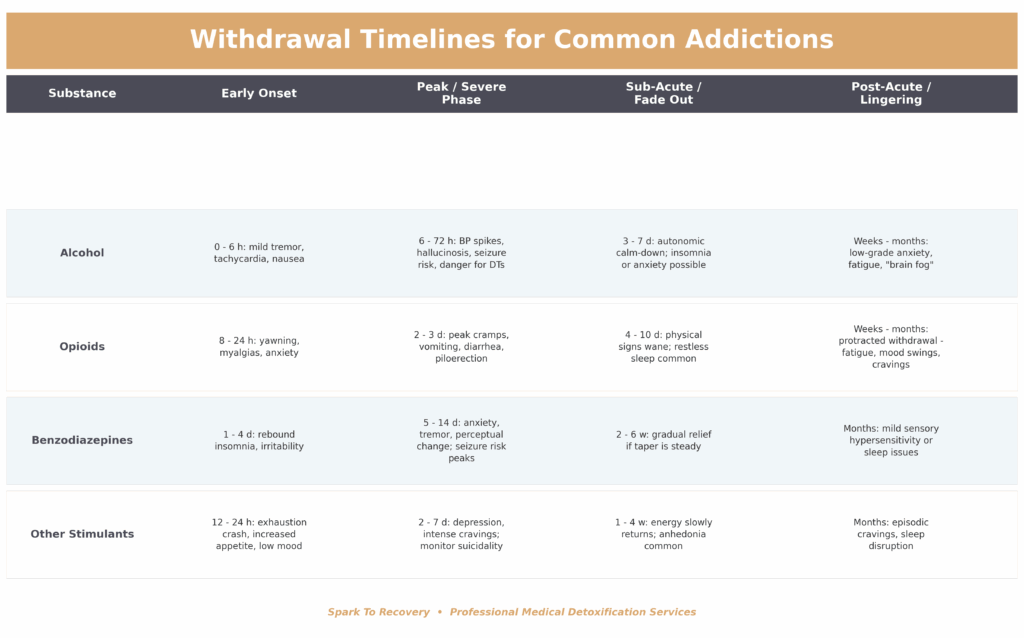
One of the most common questions we hear is: “How long will this take?” The answer varies dramatically based on the substance involved. Here’s what you need to understand about common withdrawal patterns:
Opioid Withdrawal While Pregnant
Opioid withdrawal symptoms typically emerge within 6-12 hours after last use for short-acting opioids (like heroin) and 24-48 hours for long-acting ones (like methadone). Symptoms include muscle aches, sweating, anxiety, nausea, and insomnia. According to Health Direct Australia, “Opioid withdrawal, while extremely uncomfortable, is rarely life-threatening in adults—but during pregnancy, the stress can pose risks to the fetus.” [4]
For pregnant women, medical professionals often recommend medication-assisted treatment (MAT) with methadone or buprenorphine rather than complete withdrawal, as this provides better outcomes for both mother and baby.
Alcohol Withdrawal During Pregnancy
Alcohol withdrawal is one of the most dangerous types of detoxification during pregnancy. Symptoms can begin within hours and may include tremors, anxiety, hallucinations, and in severe cases, seizures. The risk of complications makes medically supervised alcohol detox absolutely essential for pregnant women.
Stimulant Withdrawal (Cocaine, Methamphetamine)
Stimulant withdrawal is primarily psychological, with symptoms including depression, fatigue, increased appetite, and sleep disturbances. While not typically medically dangerous, the psychological toll during pregnancy requires professional support to prevent relapse.
American Addiction Centers emphasizes that “understanding withdrawal timelines helps patients and providers anticipate and manage symptoms proactively, which is especially critical during pregnancy.” [5]
The Third Trimester Consideration: Detoxing While Pregnant Third Trimester
Many women wonder if timing matters—specifically, is detoxing while pregnant third trimester safer or riskier than earlier in pregnancy? The answer is nuanced.
First Trimester Concerns: The first trimester is when major organ systems develop, making this period particularly sensitive to both substance exposure and withdrawal stress. However, the risk of certain complications (like premature labor) is lower.
Second Trimester Considerations: Often called the “golden window,” the second trimester may offer the most stable period for medically supervised detox. The baby’s major organs have formed, and the risk of premature labor remains relatively low.
Third Trimester Challenges: Detoxing during the third trimester presents unique challenges. Your baby is larger and more developed, but the risk of premature labor increases. Medical teams must carefully balance the benefits of detoxification against the risks of triggering early delivery. For some substances, maintenance therapy (rather than complete detox) may be recommended to avoid precipitating labor.
FAQS – Frequently Asked Questions
How can I detox my body while pregnant?
The short answer: you can’t—and shouldn’t—try to detox your body while pregnant without medical supervision. Those “fastest way to clean out your system while pregnant” searches? They’re leading you down a potentially dangerous path. The safest approach is always admission to a medical detox program where specialists can monitor both you and your baby continuously. There are no safe home remedies, detox drinks while pregnant, or natural shortcuts that can substitute for professional medical care.
Can you clean out your system while pregnant?
Here’s the uncomfortable truth: pregnancy isn’t the time for DIY detox experiments. Your body is already working overtime to support fetal development, and adding the stress of withdrawal—even “natural” withdrawal—can have serious consequences. Proper medical detoxification isn’t about speed; it’s about safety. At facilities like Spark To Recovery, we’ve developed protocols specifically designed for pregnant women that prioritize gradual, medically managed withdrawal over rapid “system cleaning.”
What will happen if I detox while pregnant?
What happens during pregnancy detox depends entirely on the substance, your overall health, the stage of pregnancy, and—most importantly—whether you have professional medical support. With proper medical supervision, most women successfully complete detox and go on to have healthy pregnancies and deliveries. Without medical support, the risks escalate dramatically and can include everything from miscarriage to life-threatening complications.
Comprehensive Care for Mothers-to-Be At Spark To Recovery
At Spark To Recovery, we understand that discovering you’re pregnant while struggling with substance use isn’t just a medical crisis—it’s an emotional crossroads that requires compassion as much as clinical expertise. Our approach to detox for pregnant women integrates several key components:
Medical Excellence: Our medical team includes physicians specializing in addiction medicine, obstetricians, and nurses trained in high-risk pregnancy care. We use evidence-based protocols tailored to your specific situation, with 24/7 monitoring and immediate access to obstetric intervention if needed.
Individualized Treatment Plans: No two pregnancies are identical, and no two addiction stories are the same. We conduct thorough assessments that consider your substance use history, pregnancy stage, medical conditions, mental health, and social support system. Your treatment plan is built around your unique needs—not a one-size-fits-all template.
Integrated Obstetric Care: Pregnancy detox isn’t just about managing withdrawal—it’s about ensuring optimal prenatal care throughout the process. We coordinate regular ultrasounds, fetal monitoring, nutritional counseling, and prenatal vitamins as part of comprehensive treatment.
Holistic Support Services: Recovery during pregnancy involves more than just physical detoxification.
Our program includes:
- Individual therapy to address underlying trauma and mental health concerns
- Group support with other expectant mothers in recovery
- Parenting education and preparation
- Nutritional counseling to optimize maternal and fetal health
- Care coordination with community resources
- Discharge planning that sets you up for long-term success

The Path Forward: From Detox to Lasting Recovery
Successfully completing medical detox while pregnant is just the beginning of your recovery journey—not the end. The reality is that detoxification addresses physical dependence, but lasting recovery requires addressing the psychological, social, and environmental factors that contributed to substance use in the first place.
This is why continuing care after detox is so crucial. Whether through residential treatment, intensive outpatient programs, medication-assisted treatment, or ongoing therapy, maintaining support throughout your pregnancy and beyond dramatically improves outcomes for both you and your baby.
Studies consistently show that pregnant women who receive integrated addiction and prenatal care have better outcomes than those who receive either service in isolation. You deserve comprehensive care that sees you as a whole person—not just a set of symptoms to manage.

Your Next Step Starts Here
If you’re pregnant and struggling with substance use, please know this: you are not alone, you are not beyond help, and seeking treatment is one of the bravest, most loving things you can do for yourself and your baby. The question isn’t whether you can detox while pregnant—it’s whether you’re ready to take that first step toward medically supervised, compassionate care.
At Spark To Recovery, we’ve created a space where judgment has no place and healing is always possible. Our team is standing by to answer your questions, address your fears, and help you create a treatment plan that prioritizes both your safety and your baby’s wellbeing.
Take the first step today. Call our confidential helpline to speak with an admissions specialist who understands what you’re going through. Whether you’re in your first trimester or approaching delivery, whether this is your first time seeking help or your tenth, we’re here to walk alongside you on the path to recovery.
Because here’s what we know for certain: the best time to seek help was yesterday. The second-best time is right now.
Sources
[1] Fine, A. H., & National Institute on Drug Abuse. (2006). Medical detoxification: Interventions for acute intoxication and withdrawal. In Substance Abuse Treatment Advisory Board: Evidence-Based Guidelines. National Institutes of Health. – https://www.ncbi.nlm.nih.gov/books/NBK310652
[2] American Addiction Centers. (2024). Withdrawal timelines and treatment protocols for substance use disorders. American Addiction Centers Clinical Research Division. – https://americanaddictioncenters.org/withdrawal-timelines-treatments
[3] Australian Drug Foundation. (2024). Reducing risk: Understanding withdrawal symptoms and management strategies. Alcohol and Drug Foundation Evidence Repository. – https://adf.org.au/reducing-risk/withdrawal
[4] Health Direct Australia. (2024). Opioid withdrawal symptoms: Recognition and medical management. Australian Government Department of Health. – https://www.healthdirect.gov.au/opioid-withdrawal-symptoms
[5] Center for Substance Abuse Treatment. (2006). Detoxification and substance abuse treatment. Treatment Improvement Protocol (TIP) Series, No. 45. Rockville, MD: Substance Abuse and Mental Health Services Administration. – https://www.ncbi.nlm.nih.gov/books/NBK64119

Laura A. Fierro, Ph.D., LMFT
Board-Certified Physician in Internal Medicine