

⚠️Visitors to our site are often searching for information because they, their best friend, or a family member has unfortunately fallen into the use of dangerous substances. If you or a loved one has fallen victim to substance abuse, we protect people from the dangers and provide medically assisted treatment to encourage lasting recovery! ⚠️
Call our admissions department at (855) 855-6544 or verify your insurance here to get immediate substance abuse help for yourself or a loved one.
TL;DR
The first 72 hours of rehab are often the most intimidating part of the recovery journey—but they are also among the most important. During this period, individuals typically complete admissions, undergo medical and clinical assessments, begin detox if necessary, meet members of their treatment team, and start developing a personalized recovery plan. While every facility operates differently, the first three days are generally focused on stabilization, safety, and helping clients adjust to their new environment. Understanding what happens during the first 72 hours of rehab can reduce fear, ease uncertainty, and help individuals take the first step toward recovery with greater confidence.

Why Are the First 72 Hours of Rehab So Important?
For many people entering treatment, the first few days can feel overwhelming.
There are often mixed emotions:
- Relief
- Anxiety
- Fear
- Hope
- Uncertainty
- Shame
- Excitement about change
Some individuals arrive voluntarily. Others come after pressure from family members, employers, healthcare providers, or legal systems.
Regardless of how someone enters treatment, the first 72 hours serve a critical purpose.
Treatment providers use this time to:
- Ensure immediate safety
- Evaluate medical needs
- Assess substance use history
- Identify mental health concerns
- Begin withdrawal management when necessary
- Develop an individualized treatment plan
According to the Substance Abuse and Mental Health Services Administration (SAMHSA), early engagement in treatment is a key factor in long-term recovery outcomes.[1]
Simply put, the first three days create the foundation for everything that follows.
The Admissions Process
The first step is usually admissions.
Upon arrival, clients complete paperwork and provide information about their medical history, substance use history, mental health concerns, medications, emergency contacts, and insurance information.
While paperwork may not feel particularly exciting, it helps the treatment team understand each person’s unique circumstances.
Admissions staff often gather information regarding:
- Primary substance of concern
- Length of use
- Previous treatment experiences
- Medical conditions
- Psychiatric history
- Family history of addiction
- Current medications
This process also gives clients an opportunity to ask questions and become familiar with the facility.
Many people are surprised to discover that admissions is often far less intimidating than they expected.
The goal is not judgment.
The goal is understanding.
Medical Evaluation and Health Assessment
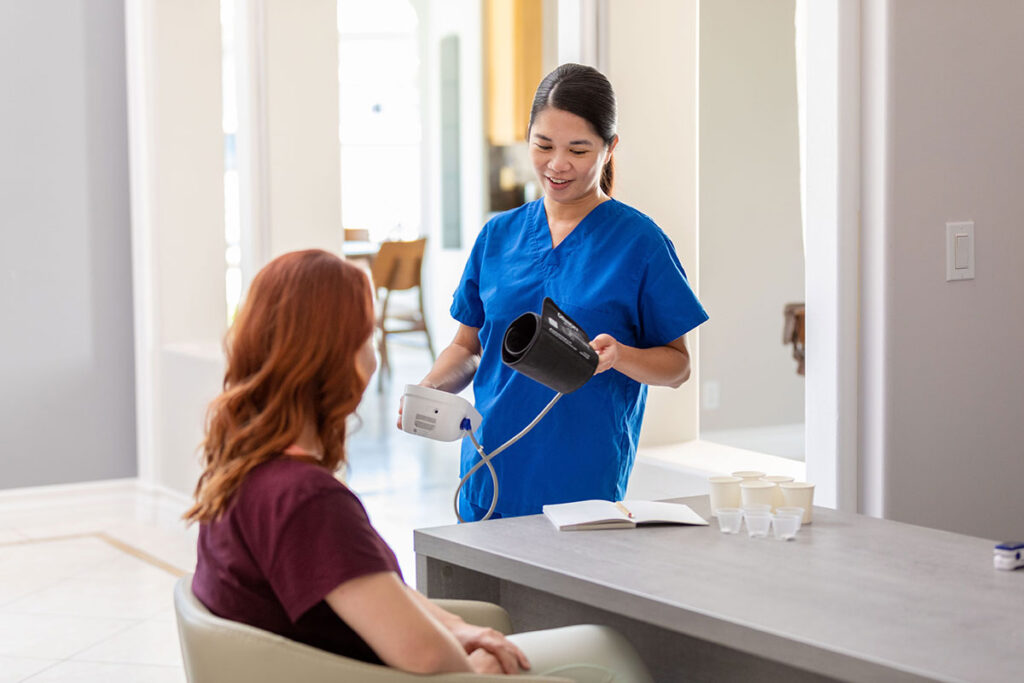
Once admissions are completed, a comprehensive medical evaluation usually follows.
This assessment helps determine whether detoxification or medical monitoring may be necessary.
Healthcare professionals may evaluate:
- Vital signs
- Heart rate
- Blood pressure
- Temperature
- Breathing patterns
- Current withdrawal symptoms
- Physical health concerns
Laboratory testing may also be performed depending on the facility and individual circumstances.
The treatment team wants to identify any conditions that may require immediate attention.
For example:
- Alcohol withdrawal risks
- Opioid withdrawal symptoms
- Chronic medical conditions
- Infectious diseases
- Nutritional deficiencies
This information helps ensure treatment begins safely and appropriately.

Clinical and Psychological Assessment
Addiction rarely exists in isolation.
Many people entering treatment also struggle with:
- Anxiety
- Depression
- Trauma
- Bipolar disorder
- PTSD
- Personality disorders
According to the National Institute on Drug Abuse (NIDA), substance use disorders frequently occur alongside other mental health conditions.[2]
This is why comprehensive psychological assessments play such an important role during the first 72 hours.
Clients may meet with:
- Therapists
- Counselors
- Psychologists
- Psychiatrists
Discussions often focus on:
- Mental health history
- Emotional challenges
- Trauma experiences
- Family relationships
- Recovery goals
- Current stressors
These conversations help the treatment team develop a personalized plan that addresses the whole person rather than simply the addiction.
Will Detox Start Immediately?
For many individuals, yes.
Whether detox begins immediately depends largely on the substances involved and the individual’s physical condition.
Medical detox may be necessary for people withdrawing from:
- Alcohol
- Benzodiazepines
- Opioids
- Certain prescription medications
Detox is designed to help the body safely adjust to functioning without substances.
Common withdrawal symptoms may include:
- Anxiety
- Sweating
- Tremors
- Nausea
- Insomnia
- Muscle aches
- Cravings
Some clients require medication-assisted support to improve comfort and reduce medical risks.
Importantly, detox is not the same thing as rehab.
Detox addresses physical dependence, while rehabilitation addresses the psychological, emotional, and behavioral aspects of addiction.
However, for many people, detox is the first major milestone in recovery.
Meeting Your Treatment Team
One of the most reassuring parts of the first few days is meeting the people who will help guide the recovery process.
Treatment teams often include:
- Physicians
- Nurses
- Therapists
- Counselors
- Case managers
- Recovery specialists
Each professional plays a different role.
Physicians focus on medical care.
Therapists address emotional and psychological challenges.
Case managers help coordinate treatment planning and future care needs.
Recovery specialists often provide guidance from personal recovery experience.
Many clients arrive expecting a cold or institutional environment.
Instead, they often discover a team genuinely invested in helping them succeed.
Beginning Individual Therapy
While intensive therapeutic work may not begin immediately, many clients participate in their first individual counseling sessions during the initial days of treatment.
These early sessions often focus on:
- Understanding treatment goals
- Building rapport
- Exploring motivations for recovery
- Identifying immediate challenges
The therapist is not there to judge or criticize.
Their role is to help clients understand the factors contributing to addiction and begin developing healthier coping strategies.
For many individuals, this is the first time they have openly discussed their struggles in a supportive environment.rograms are designed to reduce these risks while providing medical monitoring and symptom management.
Participating in Group Therapy
Group therapy is a cornerstone of many treatment programs.
Although some individuals feel nervous about group sessions initially, they often become one of the most valuable aspects of treatment.
During early group sessions, clients may:
- Share their experiences
- Listen to others in recovery
- Learn about addiction
- Develop communication skills
- Build peer support
One of the most powerful realizations during group therapy is discovering that you are not alone.
Many clients enter treatment believing no one else could possibly understand what they are experiencing.
Group therapy often challenges that belief.
Developing a Personalized Treatment Plan
No two recovery journeys are identical.
This is why treatment plans are tailored to each individual.
During the first 72 hours, the treatment team uses information gathered from medical, psychological, and substance use assessments to create a personalized treatment strategy.
The plan may include:
- Individual therapy
- Group counseling
- Family therapy
- Medication management
- Trauma treatment
- Relapse prevention
- Aftercare planning
Personalized care helps ensure treatment addresses the specific needs of each client rather than applying a one-size-fits-all approach.
Common Emotions During the First 72 Hours
The first three days can be emotionally intense.
Many individuals experience:
| Emotion | Why It Happens |
|---|---|
| Anxiety | Fear of the unknown |
| Relief | No longer hiding the problem |
| Guilt | Concerns about past actions |
| Shame | Stigma surrounding addiction |
| Hope | Possibility of recovery |
| Frustration | Withdrawal discomfort |
| Uncertainty | Adjusting to change |
These feelings are normal.
In fact, experiencing a wide range of emotions is often a sign that healing has begun.
The treatment team expects these reactions and helps clients navigate them safely.
What Family Members Should Expect
Families often feel anxious while their loved one enters treatment.
Many wonder:
- Are they okay?
- What are they doing?
- When can I talk to them?
- Will treatment work?
Every facility has its own policies regarding communication, visitation, and family involvement.
However, families should understand that the first few days are usually focused on stabilization and adjustment.
This period allows clients to:
- Settle into treatment
- Complete assessments
- Begin detox if necessary
- Establish routines
Family involvement often increases as treatment progresses and therapeutic work begins.
Getting Help with Addiction at Spark To Recovery
If you’ve been searching “what happens during the first 72 hours of rehab,” there’s a good chance you’re facing an important decision.
Maybe you’re considering treatment for yourself.
Maybe you’re helping a loved one explore recovery options.
Or perhaps you’re feeling overwhelmed by uncertainty and simply want to know what to expect.
The truth is that entering rehab can feel intimidating—but it doesn’t have to be.
At Spark To Recovery, we understand the fears, questions, and emotions that often accompany the decision to seek treatment. Our experienced team provides medically supervised care, individualized treatment planning, dual diagnosis support, and a compassionate environment designed to help clients feel safe from the moment they arrive.
Recovery from drugs doesn’t begin when all the answers are known.
Recovery begins when someone decides to take the first step.
If you’re ready to learn more about treatment options, Contact Spark To Recovery today to speak with a compassionate admissions specialist about available treatment options.

Frequently Asked Questions
1. What happens during the first day of rehab? The first day typically includes admissions paperwork, medical assessments, clinical evaluations, facility orientation, and discussions about treatment goals.
2. Will I go through detox during the first 72 hours? If detox is medically necessary, it often begins immediately after admission. The exact timeline depends on the substance involved and the individual’s condition.
3. Can I contact my family during the first few days? Policies vary by facility. Some programs limit communication initially to help clients focus on stabilization and adjustment.
4. What if I’m nervous about going to rehab? Feeling nervous is completely normal. Many people experience anxiety before entering treatment, but most report feeling more comfortable once they meet staff and begin settling into the program.
5. What should I bring to rehab? Most facilities provide a list of approved items. Common recommendations include comfortable clothing, identification, insurance information, prescribed medications, and essential personal hygiene products.
Sources
[1] Substance Abuse and Mental Health Services Administration. (2024). Treatment Improvement Protocol (TIP) Series: Substance Use Disorder Treatment. U.S. Department of Health and Human Services. — https://www.samhsa.gov
[2] National Institute on Drug Abuse. (2024). Common Comorbidities with Substance Use Disorders Research Report. National Institutes of Health. — https://nida.nih.gov/publications/research-reports/common-comorbidities-substance-use-disorders
[3] MedlinePlus. (n.d.). Substance Use Recovery and Treatment. U.S. National Library of Medicine. — https://medlineplus.gov
[4] National Institute on Drug Abuse. (2024). Principles of Drug Addiction Treatment: A Research-Based Guide. National Institutes of Health. — https://nida.nih.gov
[5] American Society of Addiction Medicine. (2024). Levels of Care and Addiction Treatment Standards. — https://www.asam.org